Tuesday, November 21, 2006

UK - Finalist


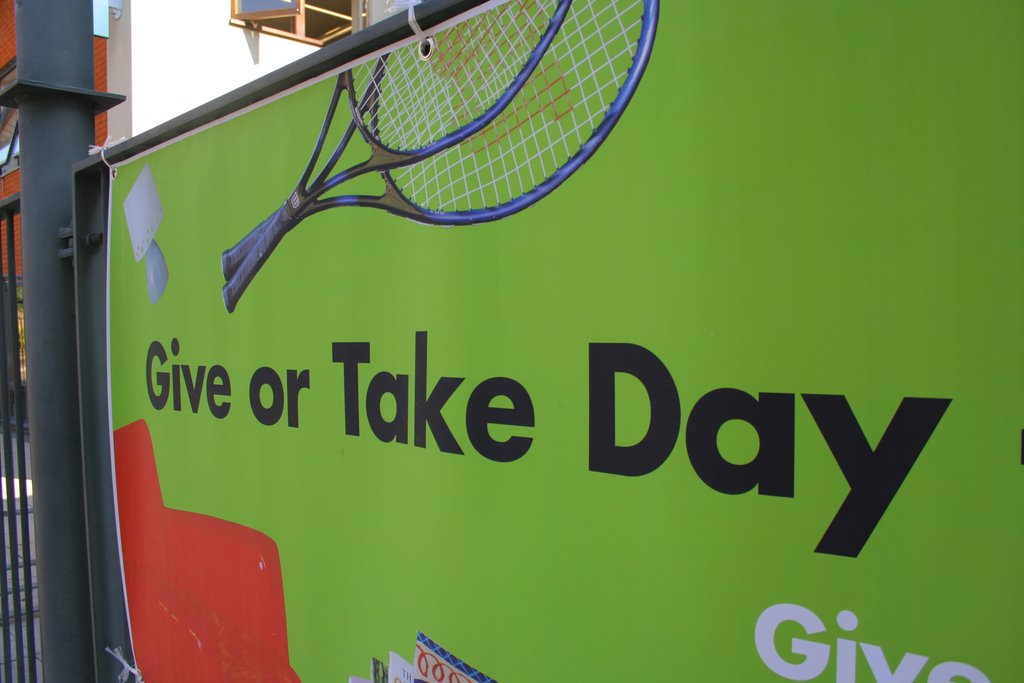
The judges were really impressed with Hackney’s Give or Take days, which give residents the opportunity to give away unwanted items and take others they might want or need, so reducing waste. “There is a great community angle to it,” commented the judges.

Building on the Give or Take concept, Hackney decided to use the events to raise awareness of recycling and waste prevention. The judges praised Hackney’s initiative in arranging for furniture reuse and nappy laundry organisations to attend the events and further promote reuse and waste minimisation.

“They decided to take a little idea and make it into a big event. It works really well and looks very professional.”

Oh well, next year!!!

More about the night winners in here


Technorati Tags: waste minimisation

Monday, October 30, 2006

London - Hackney, Real Nappies 2005/06

Enlarge picture to read article
This is the story advertised in the Hackney Today on 21 August, 2006. Showing the results of a years worth of real nappy usage in Hackneys waste tonnage.

London - Freecycle yahoo group


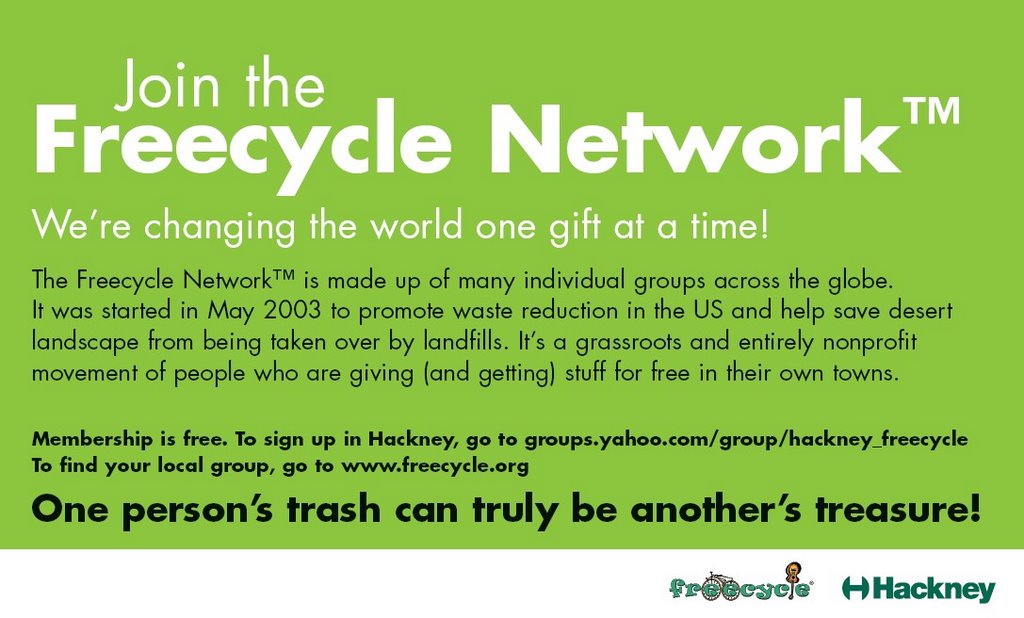
The Freecycle worldwide movement arrived in Hackney in 2006. Although there are many groups within London, I am promoting the Hackney one to help increase the number of members, so more is reused. It ties well with my Give or Takes. They are basically an online site where to give stuff away for free and more, read the add my team added in the Hackney Today local paper.

Technorati Tags: hackney

Wednesday, October 18, 2006

International - Survey of Zero Waste initiatives

Extracted from Green Alliance

Can countries, cities or businesses really eliminate waste completely? Is ‘zero waste’ an achievable absolute goal, or more a framing concept within which to develop progressive waste and resource management initiatives? With these questions in mind Green Alliance examined nine international examples where ‘zero waste’ goals or similar objectives have been set to explore the concept and the achievements of the approach in a little more detai.

A number of countries, cities and businesses around the world have adopted a ‘zero waste’ goal. Green Alliance examined a range of these initiatives at the local, regional and national scales with the aim of identifying international practices that are relevant to the ‘closed loop’ vision of transformed resource use. The survey assesses the coherence of the case studies’ objectives, identifies the policy measures put in place to achieve them, evaluates experiences to date and identifies lessons for the UK. The findings and recommendations from this work are given in the paper An international survey of zero waste initiatives (pdf format - 52KB).

A diverse range of approaches were considered: from the high-tech, large-scale waste management systems of consumerist San Francisco; to the locally based, small-scale initiatives in the Philippines. Purely voluntary schemes such as that rolled out in the town of Kamikatsu, Japan were assessed along side the more legislatively based examples such as the region of Flanders, Belgium.

International surveys yield ideas and demonstrate the art of the possible yet can always be dismissed as culturally specific. However, good ideas can always be imported, perhaps with adaptation, if there is the will to change. The case studies highlight that whilst there are some inherent problems with ‘zero waste’ as a concept and as a policy objective, there are nevertheless lessons to be learnt by critically considering the achievements of existing practice, wherever in the world that may be found.

Technorati Tags: waste minimisation

Monday, October 02, 2006

Shorlisted for The National Recycling Awards!

My birthday has arrived a week early, I have been told that my Give or Take project, has been shortlisted for The National Recycling Awards! Very happy! I am now competing for the best waste minimisation project of the year with:

• Bovis Lend Lease
• CRISP
• Hitech Equipment Ltd
• London Borough of Hackney (My team)

From www.nationalrecyclingawards.com

The awards are now widely recognised as the stamp of excellence in the Recycling Industry. Symbolising success and innovation a National Recycling Award will help generate publicity and increase the status of your business or organisation within the industry and wider business community.

JOIN US ON THE 15TH OF NOVEMBER TO FIND OUT WHO HAS WON! National Recycling Award winners will be presented with their awards at a glittering ceremony to be held at the Bournemouth International Centre on the 15th November 2006. This event is the industry's most glamorous awards event and the audience a who's who of the industry.

Technorati Tags: waste minimisation

Thursday, September 28, 2006

Denmark - Industrial Waste Minimisation working

Using financial support from the Danish EPA, the engineering works and iron foundry Vald. Birn A/S has launched work to minimise waste volumes, by analysing where to find the potential savings and improvements. Efforts to reduce waste volumes resulted in savings of 3,222 tonnes of waste, representing an amount of DKK 2.5 mill.. The project may inspire other companies in the foundry and machine industry. These are great savings - of money as well as other resources.

Technorati Tags: waste minimisation

Friday, September 22, 2006

London - Hackney, Real Nappy Network


The newsletter for Autumn 2006 from the Hackney Real Nappy Network is out. Check out their website. Also, the Islington Real Nappy Network is forming!

Technorati Tags: waste minimisation

Thursday, September 21, 2006

Europe - Why does the strategy opt for national waste prevention programmes?

One of the findings from the analysis conducted for the strategy is that there is no single waste prevention measure that could work in all Member States, due to the variety of cultural and geographical conditions. Prevention can only be achieved through a basket of measures that are most effective when designed and applied at a national or even regional or local level. The Commission therefore concluded that it would be most effective to require Member States to develop waste prevention programmes, at the same time leaving them the freedom to determine which measures will be most effective. The national waste prevention programmes would be mandatory and would have to be developed within three years of the entry into force of the revised Waste Framework Directive. These programmes must aim at breaking the link between economic growth and the environmental impacts associated to the generation of waste. The Member States must take into consideration the measures listed in Annex four to the proposed Directive and are required to determine targets and indicators for the measures they include in their national programmes. This will be the best way of achieving cost effective waste prevention.

From "Thematic Strategy on the prevention and recycling of waste and the proposal for the revision of the Waste Framework Directive" Look for question 13 to find European headline waste statistics with a single clear reference. A useful FAQ document from the European Commission arms you with statements and a reference

Technorati Tags: waste minimisation

Thursday, September 14, 2006

Ireland- Waste generation problem

Ireland has the highest level of municipal waste generation per capita of all the benchmark countries and manufacturing waste generation per employee is also relatively high. By not generating waste, we can eliminate the need to handle, transport, treat and dispose of waste. We can also avoid having to pay for waste management services. Investing resources in waste prevention and minimisation offers potential long-term benefits for the competitiveness of enterprises of all types. It is imperative for Ireland's future economic growth and environmental sustainability that the necessary resources and commitment to implement the National Waste Prevention Programme 2004-2008 are provided.

From RRF news

Technorati Tags: waste minimisation

Tuesday, September 12, 2006

London, Hackney - Give or Take IV

Hackney will be having its fourth Give or Take of the year. This one will take place on 23 September in Queensbridge Sports and Community Centre, Activity Room 1 and Café Room, 30 Holly Street, Dalston, E8 3XW

Since the start of my first event, many other councils in London have held these events, as they are been included in the waste prevention strategies. This will conclude my yearly Give or Take events, I will be writing a short report concluding its success and recommendations to carry on or offer a group to do them for us. Anyway, Give or Take days are a community waste exchange event – an opportunity for residents to give unwanted items like furniture, bikes, toys, tools, books, kitchenware and bric-a-brac, and then take something they might like or need. As well as providing residents with the opportunity to Give or Take unwanted items, the event also helps reduce the amount of waste that builds up in Hackney. It will be a fun, activity-packed community based day with a bouncy castle for kids. I will be posting photos of the goods and the actual tonnages reused by the four events held in the last year.

Technorati Tags: waste minimisation

Saturday, September 09, 2006

MSc Thesis -Mobile phone eco-design

The title of my MSc thesis was: "The effect of WEEE & RoHS Directives upon the eco-design of mobile phones marketed within the European Union" Finished in 2003. This is the abstract plus some graphs.

The obligations set by the waste of electrical and electric equipment directive (WEEE) and the restriction of hazardous substances in electrical and electric equipment directive (RoHS) are looked up upon the ecodesign of mobile phones. The WEEE directive sets a requirement of recyclability target of 65% at least. Various alternatives are examined to enable mobile phone manufacturers achieved this target. The disassembly of the printed wiring board and the liquid crystal display of the mobile phones are also required. Manual disassembly is currently the main cost in the recycling process, for this reason automatic mechanisms alternatives are also examined. Producers are required to provide information to recycling processes on hazardous substances location and disassembly procedures. Bard codes and smart tagging are proposed as possible alternatives. Lead and brominated flame retardants are to be phased out from mobile phones by August 2006. The surveyed companies considered lead which is used for soldering process the most challenging restricted substance in the RoHS directive. Alternatives lead solders are already being used by leading companies. Almost all of the contacted companies use a diverse range of methods in order to meet the requirements. Design changes need to be applied early in the phone development process. Ecodesign tools aid producers into achieving this at an early stage of the phones life cycle.

National mobile subscribers/penetration, 1991-2007

The mobile phone manufacturers that were contacted have mainly over a decade of experience in the production field. They mainly considered themselves to be somewhat above other companies of the same sector in environmental issues. All of them have been researching for design changes for more than two years to date. The public in general is interested in environmental friendly mobile phones, however many would not buy it if prices were slightly higher. Peoples’ awareness on the existence of the directives is totally non existent. Recommendation is suggested for information campaigns awareness to start as soon as is possible.

My methodology was based on literature review, email questionnaires to the public (150 answers) and email/post questionnaires to global mobile phone manufacturers.

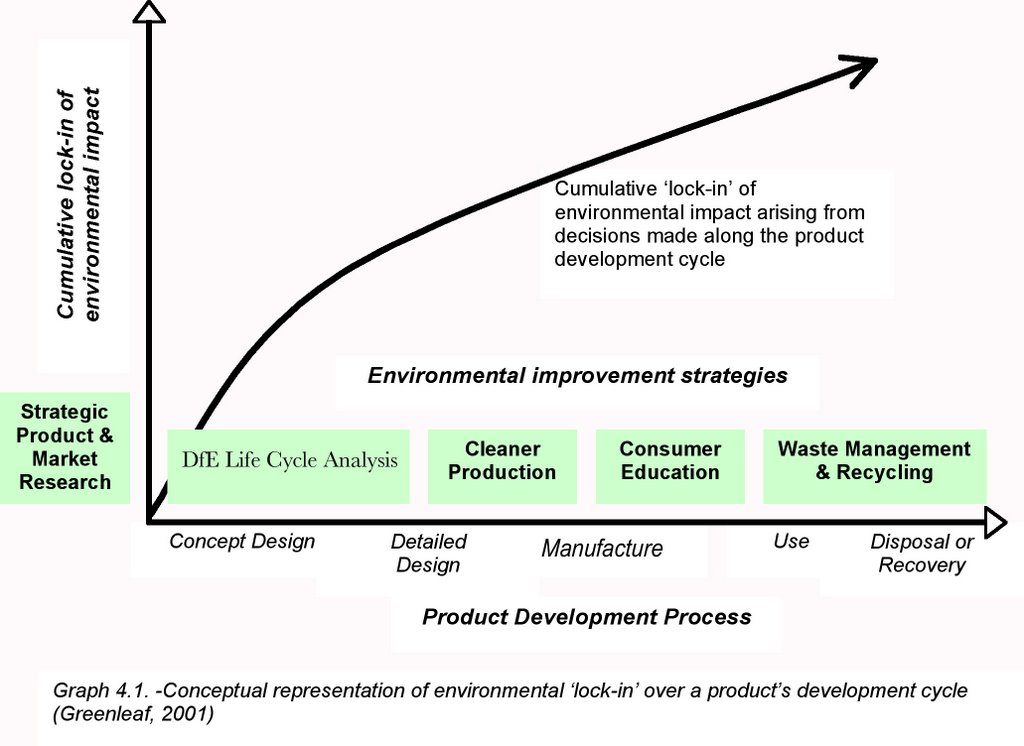
Ecodesign is also known as Design for the Environment (DfE) or lifecycle design, see graph below. In most cases an average of 80% of the environmental inputs are fixed during the research and development stage.


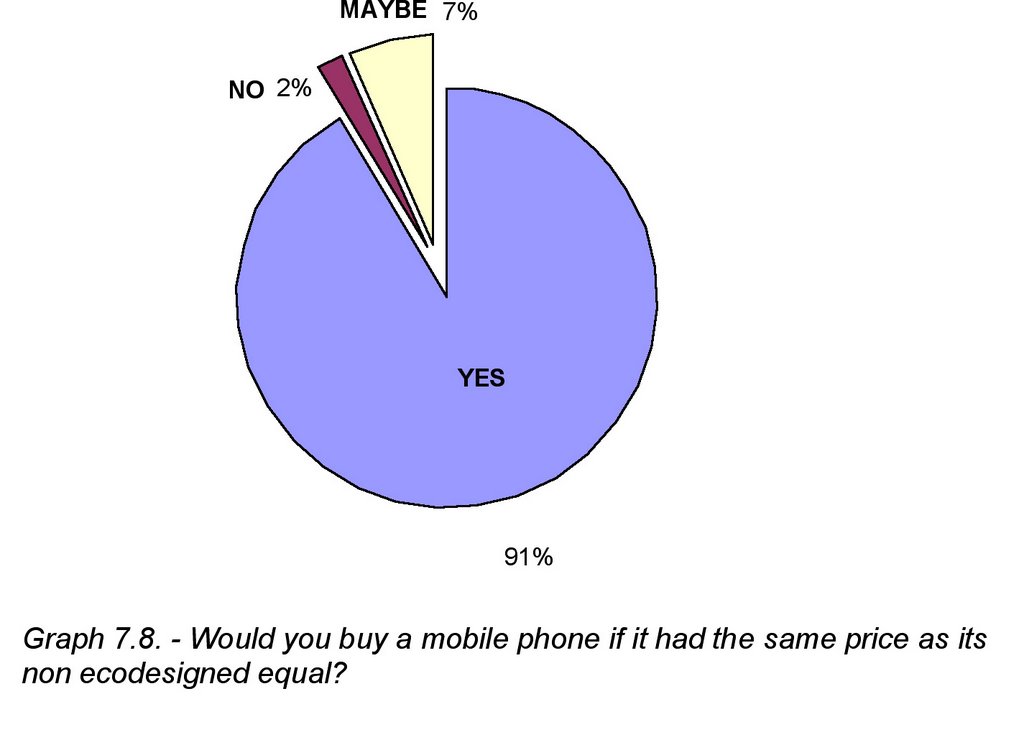
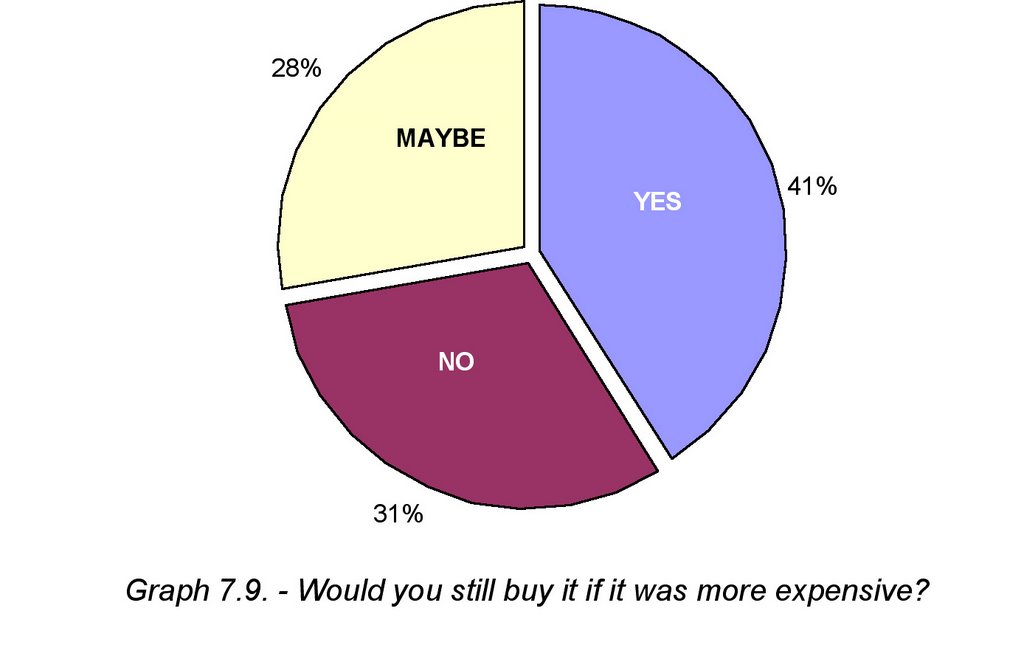
These are some of the pie charts for the 150 answers-questionnaire to the general European population.


There is a large difference in responses, showing that Europeans have limits and wont be paying more for a commodity that they already can have without looking further in their pockets. You will always get a niche for an eco product, but the market is reduced. The higher prices should be added compulsory, payed by manufacturers and the public. This is everyones' problem and must be tackled by everyone.

Email me at ander80@gmail.com you want the thesis.doc. Thanks.

Technorati Tags: waste minimisation

Tuesday, September 05, 2006

London, Hackney - Furniture reuse birthday


Morph and Hackney Recycling team are getting together to celebrate Morph's first year anniversary. The shop opened on 14 April, 2005. It has been collecting reusable furniture around Hackney since then, and is now expanding even more! The collected furniture is refurbished and sent to the shop. Residents in low income can benefit with the 30% discount priviledge card, however the prices are already low.

Attendance only by confirmation from RSPV (in picture above)

Technorati Tags: waste minimisation

Thursday, August 31, 2006

London, Hackney - No Junk Mail trial


After many events around Hackney and after promoting "No Junk Mail" stickers to residents, I have had different answers to the efficiency of these stickers in letterboxes to stop junk mail getting into houses. I decided to recruit 30 volunteers within the Hackney area to carry out my trial:

• 4 September - 1 October: Start date & 1st phase of trial. We will provide you with 2 cotton bags to collect your junk mail. Collect all junk mail received beginning on September 4. Put it all into the green cotton bag. Let everyone in your household know, so nothing is accidentally thrown away or recycled.

• 2 -7 October: Collection of junk mail. The recycling team will be collecting the green bag with the junk mail. We will contact you to arrange collection.

• 2 October – 29 October: 2nd phase begins. Put your Sticker on your letterbox! On the evening of the 1st of October or very early morning on the 2nd, please stick your ‘no junk mail’ sticker on your letterbox, and get your second green bag out ready to use to collect any junk mail.

• 30 October – 5 November: Collection of junk mail. The recycling team will be collecting the second green bag with the junk mail you collected. We will contact you to arrange collection.

• After 5 November: £20 M&S voucher & green bags returned. After we have successfully collected both bags from the two separate phases we will give you a £20 M&S voucher, and your green cotton recycling bags will be returned!

This is the timetable I sent to those participating to check for the efficiency of the stickers in reducing junk mail. The data will be ready by November. I have been calling every single participant to remind them about the trial start date and clarifying other points to make sure the results is as accurate as possible.

Technorati Tags: waste minimisation

Wednesday, August 09, 2006

UK - IKEA against plastic bags


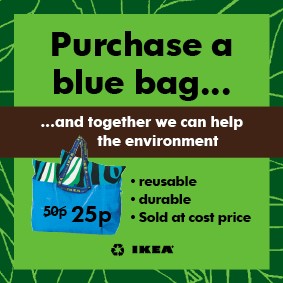
On the 5th of June, IKEA UK will make a pledge to reduce plastic bag usage from 32 million per year to 12 million per year. We will achieve this by encouraging our customers to refrain from using plastic bags by charging 5p per bag. We will reduce the price of the Blue bag to 25p to encourage customers to switch to a re-useable bag. IKEA will not make any profits from this. The profits will be donated to local community forests.

Click here to read their press release. It is very informative. Very proactice like Lidl


Technorati Tags: waste minimisation

Monday, July 31, 2006

Japan - burger chain abolishes plastic takeout bags

Japanese Mos Food Services, Inc., owner of the Japanese Mos Burger chain, has announced it will stop using plastic takeout bags and introduce transparent corn-based takeout drink cups at all stores in July.

Japan for Sustainability reports that this is the first major fast-food restaurant chain in Japan to introduce biodegradable drink cups at all its stores. Mos Burger expects that the use of such containers will reduce around 130 tons a year of consumption of plastic raw materials, and abandoning plastic bags will reduce oil consumption by around 352 kiloliters (about 1,760 barrels) a year, estimated from the company's use of plastic products in 2005.

Meanwhile, the company has introduced paper takeout bags and reviewed its use of package materials. The new paper bags are made of unbleached paper and cost more than plastic bags, but the company plans to offset the rise in cost by efforts to reduce the number of bags and other packaging used.

Mos Burger also started selling the "Mos My Bag," a new original cotton bag, to encourage customers to use their own takeout bags rather than paper bags. The bag is sold for 700 yen (about US$6) including tax. The company plans to continue shifting to renewable materials from petroleum-based products for its packaging and containers.

From RRF news

Technorati Tags: waste minimisation

Friday, July 21, 2006

Denmark - Reuse by promoting repairs

The Organic Council (Det Økologiske Råd - DØR) has initiated a project on waste prevention through promotion of repairs. International Waste News from Denmark reports (No. 3, June 2006) that the project will among other investigate whether local repair shops can be established in two locations in Copenhagen. The project will be carried out in cooperation between two agenda centres:

• Agenda centre SundbyØster
• Bispebjerg Environmental Centre.

The starting point of the project is the increasing waste amounts.

Although amounts of waste for landfilling have been reduced, it has not been possible to stop the increase in waste amounts. The project shall test two product groups - electronics and furniture. These have been selected because there is a potential for increased repairs, since a lot is scrapped today when people see no benefit in repairing things. On the other hand there exists a relatively well functioning network of repairmen of e.g. bicycles, cars and white goods. For furniture and electronics with a new price above app. 2000 DKK it must also be assumed that it would be repaired if the item is not totally written-off or outdated. With white goods it must also be taken into consideration that older machines should rather be written-off than repaired, because their power consumption is too high and they may contain CFCs.

Existing internet guides

Already today there exists the site www.repairationsguiden.dk, operated by the Environment and Energy Centre in HØje Tåstrup but which covers the whole country. It is sponsored by several municipalities, including Copenhagen. This site is recommended because it gives an overview of existing groups of goods and municipalities and the connecting repair shops. However it does have shortcomings. One of the barriers of repairs is that most repairmen operate with a starting fee. For electronics it is often e.g. 800 DKK to even examine the problem. Therefore most people will abstain from this solution unless the new price is well over 1000 DKK. The problem is connected to the fact that mostly the retail shop receives the broken electronic item from the customer but do not carry out the repairs themselves. They send the goods somewhere else and hereby the bear considerable costs before even starting to do any repair work. The guide gives the impression that there are already quite a few repairmen in Copenhagen municipality but also that there are areas with very few of them. In terms of furniture repairs there are several in the municipality but must of them do upholstering and do not repair antique furniture.

Only few can do joinery and are able to repair e.g. broken chairs and tables. Extended warranty Another way of securing goods for longer time is to extend the warranty period. This exists today for instance in the radio and television sector, for MP3 recorders etc. where it is possible to get a four year warranty by paying extra. But the Consumer Council is sceptical of these arrangements because there are cases where retailers have not respected these warranties. The project will review whether it is possible to improve these warranty arrangements. The project is implemented in the period 15 May - 31 December 2006

From RRF news

Technorati Tags: waste minimisation

Tuesday, June 27, 2006

UK- London, Hackney - Give or Take III

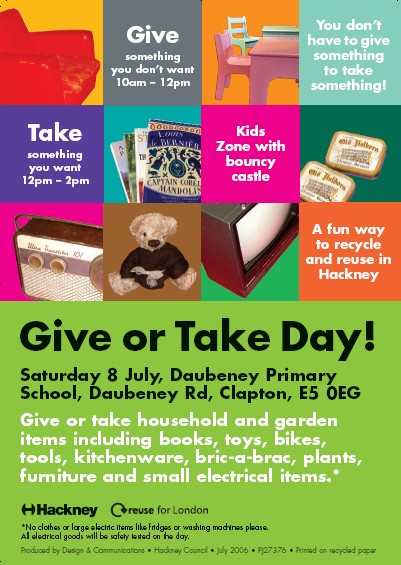
On Saturday 8 July at Daubeney Primary School, the Hackney council recycling team will be holding the 3rd Give or Take Day for local Hackney residents.

Give or Take days are a community waste exchange event – an opportunity for residents to give unwanted items like furniture, bikes, toys, tools, books, kitchenware and bric-a-brac, and then take something they might like or need. As well as providing residents with the opportunity to give or take unwanted items, the event also helps reduce the amount of waste that builds up in Hackney.

I am aiming to get as many people to this event as possible so if you would like to send this post, please click below on the letter caption to "Email post" to friends or relatives. It will be a fun, activity-packed community based day.

Check previous goods from the 2nd Give or Take we held in Woodberry Down, N4.

Technorati Tags: waste minimisation

Thursday, June 08, 2006

UK- London, Hackney - Be Recreative

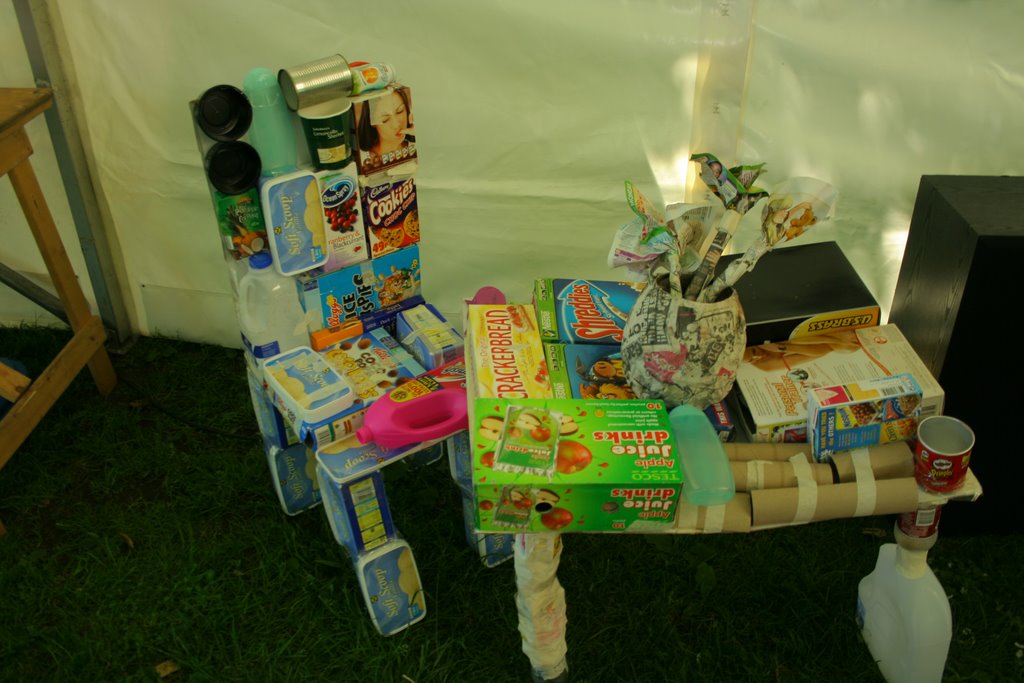
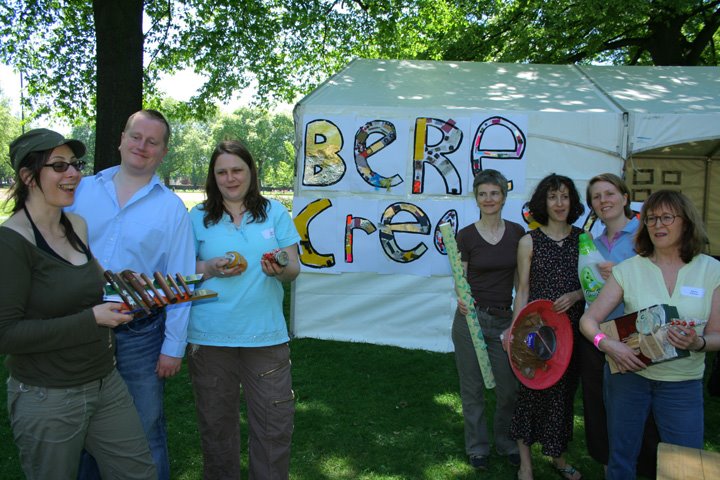
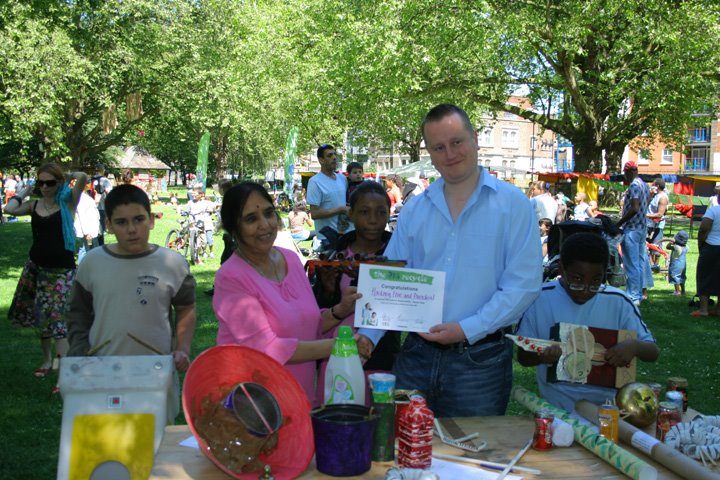
Hackney council celebrated The Big Recycle 2006 at Hackney Council's BIG Recycle Day on Saturday 3rd June at London Fields Park. This year Hackney hosted a family fun day with the Reuse theme on mind, including mini reuse workshops, face painting, bouncy castle and stalls with participation from organisations including ecoACTIVE, Morph. In addition to these activities, the day also showcased artwork from children from four local schools- Hackney Free and Parochial, Mossbourne Community Academy, London Fields Primary and St John the Baptist Primary. This exhibition was the culmination of the BeReCreative project, which aimed to get children thinking creatively within the framework of "reduce and "reuse" by making use of materials that would have been discarded.

Two local artists have been working with two schools each to help design and create artowrks, useful household items, musical instruments or any other concept using recyclable materials. Prizes were awarded to all four schools. The best innovative work was based on sustainability, the amount of material used, aesthetics and functionality.

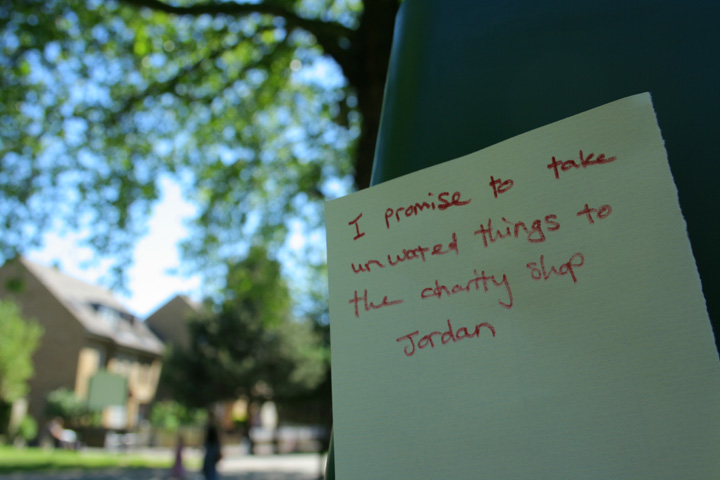
The weather on that saturday really helped and people created pledges and sticked them on 30 green boxes laid out in the field. These are some of the photos of the day:


Technorati Tags: waste minimisation

Thursday, June 01, 2006

USA - Waste Free lunches

Lunches are known to create an incredible amount of waste, originated from packaging. The site Waste Free Lunch dedicated to this problem. Their data is based in USA statistics, however any developed countries will be able to use their information to apply similar projects, for schools or offices.

Most parents pack lunch items in single-use plastic bags, aluminum foil, or wax paper, or they purchase single-serving items that come in their own disposable package. Admittedly, these products are extremely convenient, but what is the environmental cost to a country that relies so heavily on them? Landfills are full and overflowing. Incinerators pump contaminants into the air.

Much of the trash we generate comes from the packaging on the food we buy, and lunch foods are no exception. In fact, it has been estimated that on average a school-age child using a disposable lunch generates 67 pounds (30kg) of waste per school year. That equates to 18,760 pounds (8,500 Kg) of lunch waste for just one average-size elementary school.

What can we do to reduce lunch waste? Start local! Start a waste-free lunch program at your school. Many schools across USA have begun to do so, and they're truly making a difference!

A waste-free lunch program is a process of educating students, parents, and school staff about where our trash ends up and how we, as individuals, can reduce the amount of trash we generate. Waste-free lunch programs favor the use of reusable food containers, drink containers, utensils, and napkins. They discourage the use of disposable packaging, such as prepackaged foods, plastic bags, juice boxes and pouches, paper napkins, and disposable utensils.

What does a waste-free lunch look like?

*With this type of lunch, lunch food items can be bought in larger quantities. The packaging can be left at home for reuse or recycling. Waste-free lunches are not only a wise environmental choice, but they are less expensive as well.
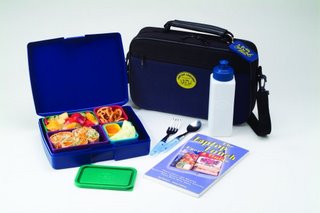

What does it cost to pack a waste-free lunch?

A Disposable Lunch, 1 egg salad sandwich, ($1.25), 1 yogurt (.85), 1 granola bar, (.45), 1 apple (.30), 1 package of carrots and dip (.65), 3 plastic bags (.12), 1 juice pouch (.35), 1 plastic spoon (.04), 1 paper napkin (.01)
TOTAL: $4.02

A Waste-free Lunch, 1 egg salad sandwich ($1.25), 1 serving of yogurt (.50), 1 serving of granola (.35), 1 apple (.30), 1 serving of carrots and dip (.25), water (0), cloth napkin (0), stainless steel spoon (0), packaging (0)
TOTAL: $2.65

723.60 - 477.00 = $246.60 savings per school year per kid

For more information and valuable literature go to www.wastefreelunches.org

Technorati Tags: waste minimisation

Saturday, May 27, 2006

International - Bulletproof Packaging Punishes Consumers

The problem with the increasing use of packaging in electronic goods, annoys every kind of customer.
We're fed up with impenetrable packaging. We've all experienced those oyster-like packing materials, where even the sharpest knife in the drawer won't put a dent in them. Then you get out the industrial-strength pruning shears, make a few cuts, and the result? Shards of plastic that are sharper than a scalpel. The folks at Wired have put together a diatribe about the status of consumer electronics packaging today, and it's a satisfying read:

From Psyclone electronics cables encased in impenetrable layers of thick plastic to DigiPower camera batteries coated with packaging several times the size of the item itself, the hardest part of buying electronics these days is opening the products when you get them home. In many cases, it makes solving Halo 2 seem like a kindergarten project.

In honor of this packaging nightmare, Consumer Reports has created the annual Oyster Awards, shaming the creators of the hardest-to-open packages. It's no wonder hospital emergency rooms report significant increases in deep lacerations from product packaging during the week after Christmas. Sure, product manufactures want to make it so that products are hard to shoplift, but this is getting ridiculous. Commenters, any packaging horror stories?

Extracted from Gizmodo

Technorati Tags: waste minimisation