Monday, July 30, 2007

UK - No market food gone to waste!

Eugenia Beirer is the coordinator of a group of artists collaborating in the UK called 'Beyond The Free Market' (BTFM), they launched the Free Market Kitchen in Chelsea, challenging global issues of waste, capitalism and globalisation by scavenging food, and setting up a cooking co-op where anybody can join in and share in the wealth.

We at TreeHugger admire those who take part in such waste prevention activities. Call it what you will food foraging, gleaning, dumpster diving, freeganism or fallen fruit, its free food that would otherwise be going to waste. Find out more about the collaborative kitchen and 'skipping' tours after the jump.


The BTFM are not just food foragers however, they have political motives driving their collaborative art project, Eugenia is an artist and activist who communicates through creative expression to inspire change, she is interested in building a bridge between art and activism, using art to translate ideas coming from the activist world.

More about the Free Market Kitchen: Firstly, I take people on a ‘skipping’ tour. We recover ‘waste’ fruit and veggies from the New Covent Garden Market wholesalers early in the morning, I explain to participants the workings of the market and speak about Free Market policies and food overproduction in economic terms. This engages participants in a debate around international food trade, alternative ways of existing and sustainable living. The actual kitchen adapts itself to the space it gets set up in each time. The ‘skipped’ fruit and veg are displayed and left out for free use and there’s a record player and visual material showing where the food comes from. The kitchen encourages self-organisation and a non-hierarchical, fluid and organic structure. It’s also open to newcomers, who just drop in and find out why they’ve followed a sign inviting them for a free meal! ::Beyond the free market ::Image from Flickr ::via Style with save us and New Consumer

News from

Technorati Tags:

Wednesday, July 25, 2007

Germany - Can worms add to global warming?

The answer is yes, but please further:

Worms may not be as environmentally friendly as the growing number of gardeners who use them to help compost their kitchen scraps and grass clippings believe, say scientists.In fact, the greenhouse gases emitted by a large commercial worm composting plant may be comparable to the global warming potential of a landfill site of the same scale, according to the Open University.

This is because worms used in composting emit nitrous oxide - a greenhouse gas 296 times more powerful, molecule for molecule, than carbon dioxide.

Landfill sites produce methane which is 23 times more powerful a greenhouse gas than carbon dioxide.

Jim Frederickson, senior research fellow at the Open University's faculty of technology, said: "We know from research in Germany that a third of the nitrous oxide emissions coming from the soil are associated with worms.

"What we found from looking at large worm composting systems is that their emissions could be comparable in global warming potential to the methane from landfill sites."

The Government has said it wants to increase the amount of waste that is composted to 40 per cent by 2010 and 45 per cent by 2015 - which is likely to involve more commercial scale worm composting plants.

Red worms appear naturally in country compost heaps but over the past decade or so a thriving trade has grown up in domestic wormeries which enable people with space as limited as a balcony to compost their kitchen waste.

Domestic wormeries are dustbin-sized boxes formed from several trays, with names such as Can-O-Worms, into which reared worms are introduced. Some are even made to look like beehives.

The worms are laid out on lime and vegetable peelings. When they have digested this material they move to another level in search of more food. The lower trays of compost can be used and a tap allows the liquid collected to be drained off as fertiliser.

The red worms used in composting are extremely efficient at breaking down decomposing material such as kitchen scraps and other organic material but they emit nitrous oxide in the process of digestion in the gut.

Mr Frederickson told Materials Recycling Week said: "Everybody loves worms because they think they can do no harm but they contribute to global warming.

"The amount of worm composting is very, very small and the amount of landfill is huge. But landfill sites are quite well run these days and it is possible to extract about half the gas they generate and use it for electricity generation.

"So the amount of nitrous oxide emitted by large scale worm composting is something we should be looking at before we go further down that route."

Mr Frederickson said that the research he and his colleagues had done was on very large commercial worm composting "beds" which build up large amounts of nitrogen which is then emitted by the worms as gas.

It is unclear whether the same process goes on to the same extent in domestic worm composting bins, but Mr Frederickson said: "We are clear they will be producing nitrous oxide but maybe not to the same extent. They may be more stable.

"Worm composting bins and compost heaps produce really good compost in a decentralised way with no transport to landfill sites - which is a good thing.

"But we must remember if we are evaluating this method against other ways of getting rid of wastes, such as landfill and incineration, that worm composting can also be a source of greenhouse gas emissions."


Sources:
Telegraph UK


Technorati Tags:

Tuesday, July 24, 2007

London - Vouchers for Real Nappy London-users

There is now amazing choice in washable nappies. Boiling terries and pins are a thing of the past and real nappies now come in a wide range of easy to wash soft and natural fabrics with popper and Velcro fastenings and breathable waterproof wraps in funky designs.

This London-wide incentive scheme helps you in choosing and trying cloth nappies.

Parents and parents-to-be can receive:


  • an information pack;
  • invitations to informal sessions and events; and
  • a valuable voucher to be exchanged for 'real' (washable) nappies and accessories at listed retailers, or for a trial period with a nappy laundry service.
    There is also a helpline, activities and support for parents in Real Nappies for London boroughs.

The Scheme was launched on 29 June by Women's Environmental Network matron and presenter of BBC2's 'No Waste Like Home', Penney Poyzer along with London parents and their babies, midwives and councillors. See Real people for pictures and write up.

For more info on Women's Environmental Network's response to the recently publicised 2005 Environment Agency (EA) report on nappies visit WEN's website. A new EA report is due to be published in October 2007.

The value of the vouchers differ from councils to councils; around £25 to £54. Londoners from these boroughs can apply here to get the voucher:

  • Bexley
  • Enfield
  • Hounslow
  • Hammersmith & Fulham
  • Kennsington & Chelsea
  • Newham
  • Tower Hamlets
  • Camden
  • Haringey
  • Hackney
  • Islington
  • Lewisham
  • Redbridge
Technorati Tags:

Friday, July 13, 2007

UK, London - Shoppers face tax on plastic bags

Shoppers in London could soon have to fork out 10 pence (23.4 cents) for every plastic bag they use in a bid to reduce landfill waste.

A group of 33 London councils came up with the idea for the bag tax and will put a bill outlining a proposed new law to government MPs in November.

If successful, all shops across London would have to charge the fee on every bag they hand out, with the money to be recouped by the councils to pay for recycling.

"The proposal for a plastic bag levy underlines our commitment to addressing these concerns," Merrick Cockell, Conservative leader of the London Councils organisation, told The Evening Standard newspaper.

"We hope Londoners will join with us in commending these proposals to parliament to create a greener, safer city."

The move follows a similar tax introduced in Ireland five years ago, with shoppers charged 15 euro cents (23.8 cents) for every plastic bag they use.

The Irish tax, which has since risen to 22 euro cents (35 cents), cut plastic bag use by 90 per cent within months and raised millions of euros for environmental projects.

The London councils hope if a similar tax is introduced across the UK capital it will put pressure on the British government to introduce the levy across the nation.

About 13 billion bags are used in the UK each year


Technorati Tags:

Wednesday, July 11, 2007

Taiwan - environmentalists pan `eco-friendly' Anya Hindmarch bags


Taipei Times reports eight injured in green stampede for GBP7.50 shopping bags!

Environmentalists gathered at the entrance of the Breeze Center in Taipei, criticizing the shopping mall over its handling of the sale of Anya Hindmarch's eco-friendly bags last Friday.

Ho Tsung-hsun, secretary general of the Taiwan Environmental Protection Union and organizer of the protest, said the fashion company should also be held responsible for the chaos last week.

"Given that hundreds of customers have already lined up in front of the store the night before the sale, the company should have marked a clear route for the line to move smoothly and peacefully," he said. "Their marketing strategy is definitely eco-unfriendly."

Ho also said that the company could have done better than simply tell the public that "It's Not a Plastic Bag" -- the slogan printed on the front of the Anya Hindmarch bags.

For Sandra Peng, representative of the Taiwan Environmental Action Network, the stampede outside the Anya Hindmarch stores last Friday was hard to forget.

"I was speechless when I saw people fighting for the eco-friendly shopping bags on TV," she told the Taipei Times. "I was thinking -- `Well, if only the same number of enthusiasts were committed to protecting the environment.'"

While Peng agreed that the public should be informed about the urgent need for environmental protection, she noted the fundamental conflict that exists between encouraging consumption and preserving the environment.

"I really doubt that anyone bought the bag for the sake of protecting the Earth," she said, adding that she was aware that some bought the bags in hopes of selling them later at a higher price.
Lim said his shopping bags were made from various materials -- from used plastic bottles to other biodegradable substance.

Controversies have dogged the bag since it was first released in Britain. A BBC News broadcast on March 14 showed "We Are What We Do," an activist group that coordinated with the company in the campaign to encourage the reuse of shopping bags, was upset to find the product selling for? 175 (US$351) on eBay. The bag originally retailed at? 5.

Technorati Tags:

USA - plastic bags banned in Oakland, California

City council members in Oakland, Calif., have voted to restrict the use of non-biodegradable plastic shopping bags within city limits. The decision followed that of neighboring San Francisco, and marked an attempt by Oakland officials to promote environmental awareness in the area, Oakland Tribune reported.

Council member Patricia Kernighan said that while the vote did not apply to all uses of the bags by local supermarkets and restaurants, it did represent a positive step forward. It's a good first small step, the Grand Lake-Chinatown council woman said. It's not going to solve all of the problems in the world.

The new law forbids supermarkets from using the petroleum-based bags at their check-out areas, but not in other areas of the stores. Two council members abstained from the vote, citing a need for further investigation of the proposal. They said there were questions about enforcement and the potential impact the law might have on the grocery industry

Technorati Tags:

Friday, July 06, 2007

France - waste prevention campaign turns to the economic argument

At a recent event run by French Government agency Ademe which reviewed the national waste prevention plan (launched in 2004), it was reported that at the current pace of progress France will fail to meet a 2010 target by 15 per cent.

The Government hopes that the cost savings to be made from waste prevention may be able to reinforce the environmental arguments. The national waste prevention plan had established a target to stabilise waste generation by 2008. Later, in 2005, the Government went further - setting a target for residual waste disposal (landfill or incineration) of 200 kg per person per year in 2015 (compared with 290 kg per person per year at present at the time, of a total of 360 kg of products). An intermediate target - 250 kg per person per year by 2010 - now seems in jeopardy.

Michèle Pappalardo, President of Ademe estimated that 70 kg per person per year could be saved by ten simple measures, proposed as part of a campaign "Let's reduce our waste, it's overflowing". These measures include examples such as choosing to bulk-buy products and reducing the use of disposable items and preferring tapwater to bottled water. Despite initially disappointing results, Ademe and the French environment ministry remain optimistic. From October 2005 to October 2007 a national communications campaign has targeted the general public. Henceforth, the authorities will increasingly address businesses via the specialised press. Michèle Pappalardo warned that the industry and distributors must quickly change their products. Ademe also wants to communicate more specifically within the supermarkets; the key point of contact between producers and consumers. Already, France Nature Environment (FNE) and the Association of Consumers (CLCV) have undertaken initiatives at the points of sale to make buyers aware of less packaged and more ecological goods.

An Ademe study compared five shopping trollies comprising 150 consumer products:

*two trollies for one person with goods with minimal packaging ("minidéchets"), or with over-packaged goods ("maxidéchets")
*two trollies calculated on the same basis, but for 4 persons
*one "average cart" for 2.3 persons.

Over a year, the minidéchets trolley produced 50 kg waste, compared with 100 kg waste from the maxidéchets trolley. The order of magnitude was the same for the 4-person family trolley (203 kg/person/y for minidéchets and 391 kg/person/y for maxidéchets). Even better, the greener lifestyle saved a single person household EUR74 per month, and a greener 4-person household saves EUR167 each month.

The question is whether the economic argument will prevail where the environmental argument has not? We must wait until 2010 to find out.


Technorati Tags:

From

Friday, June 15, 2007

UK - Producers pledge to reduce packaging

In 2005, the major retailers in the UK signed up to the Courtauld Commitment with Waste and Resources Action Programme (WRAP). The meeting, initiated through WRAP's Retail Innovation Programme, focused on engaging support to find new packaging solutions and technologies, so that less rubbish ends up in the household bin. At the end of the summit, the participating retailers agreed in the achievements of its objectives:


*To design out packaging waste growth by 2008.
*To deliver absolute reductions in packaging waste by 2010.
*To identify ways to tackle the problem of food waste.

The aim is to reduce the 6.3 million tonnes of packaging reaching UK homes each year by at least 340,000 tonnes by 2010. The Commitment also requires signatories to draw-up plans to reduce the estimated 6.7 million tonnes of food waste produced in the UK each year. There are now 25 major grocery organisations signed up to the Commitment, which was drawn-up in late 2005.

Food and drinks manufacturers including Britvic and Cadbury Schweppes have signed-up to the voluntary agreement between UK retailers to reduce packaging and food waste.

WRAP's chief executive Liz Goodwin said: "This announcement is good news for the consumer and the environment. Alastair Sykes, chairman and chief executive of Nestle UK, added: "Reducing packaging waste is environmentally responsible and makes sound business sense. This partnership will benefit the environment, reduce waste and improve efficiency, so it creates shared value for our business and the wider community."

A range of measures have been implemented by other signatories including Asda's lighter salad bags which have reduced material use by 14% and Co-op's decision to remove cartons from their tomato puree.

WRAP Courtauld Commitment link

Technorati Tags:

Tuesday, June 12, 2007

UK wide - Christmas plastic bag ban urged

Shoppers and retailers are being encouraged to join a campaign for the UK's first plastic bag-free Christmas. We Are What We Do, a not-for-profit group, says plastic bag carrying should be as unacceptable as wearing fur. Shops will display logos saying "Plastic Ain't My Bag" while consumers will be encouraged to use reusable, eco-friendly bags. The group was also the force behind designer Anya Hindmarch's sell-out "I'm Not A Plastic Bag" shopping bag.

Unfashionable Virgin Megastores, Dermalogica beauty salons and scores of small retailers have pledged their support for the Christmas campaign and the group hopes that the official campaign launch on Thursday will bring in more retailers.

The group aims to have a "Plastic Ain't My Bag" logo in "every window in every shop in every high street in the country by Christmas". Shops will be asked to not automatically give out plastic bags while shoppers will be asked not to take a bag unless they really need one and to reuse an old plastic bag or carry an eco-friendly shopping bag. A plastic bag takes up to 500 years to decay in landfill. There is an alternative. It's called a shopping bag We Are What We Do
Eugenie Harvey, co-founder of We Are What We Do, said: "Wouldn't it be great if carrying a plastic bag was as unfashionable as wearing fur this Christmas?

"There's no question that there's a heightened awareness about the environment. This campaign feeds into that and is one of the simple, practical things that everyone can do to improve the environment - every bag we take ends up in landfill and takes up to 500 years to decay. "Unless it's impractical or your purchase is embarrassing, ask yourself whether you really need a plastic bag." She added: "I hope people will go deeper still and buy food that does not have lots of packaging, shop locally and buy Fairtrade tea and coffee."

The group launched in 2004 alongside the publication of a book, Change the World for a Fiver, which lists simple tips for improving people's health, community and environment.
The first tip in the book suggests declining the use of plastic bags in shops.

Throw-away bags It says: "Every person in the country uses an average of 167 plastic bags every year. That's 10 billion bags all together. A plastic bag takes up to 500 years to decay in landfill. There is an alternative. It's called a shopping bag."

David Miliband, the environment secretary, told the BBC on Sunday that throw-away carrier bags would become a thing of the past within a few years. He said the government had no plans to introduce a plastic bag tax but was working with supermarkets to make sure more bags were reused or recycled.

From

Technorati Tags:

Monday, June 11, 2007

USA - Seattle publishes study charting route to zero waste

The Mayor of Seattle recently published the results of a study to show how Seattle can get its recycling strategy back on track. Three major goals of the study were to:
  • Provide an objective, third-party evaluation of Seattle's work to date
  • Identify potential strategies that could push Seattle beyond its current 60% diversion goal
  • Evaluate the effect that implementing such strategies would have on facilities

The City of Seattle has had a long-established goal to recycle 60% of all the waste generated by its residents and businesses. In 2002, the city's recycling rate had stagnated at less than 38%.

In November 2003, Mayor Nickels proposed 10 innovative programmes to help the city reach 60% diversion by 2010, including a recycling ordinance for businesses and residents, free recycling services for small businesses and a residential food waste collection program. By 2005, Seattle's recycling rate had sharply risen to 44% , with even more gains expected.

The newly completed study, jointly sponsored by the City Council is in two parts. The main report is in Volume 1 (PDF). All the strategies that were considered for the report are contained in Volume 2 (PDF).

Seattle Public Utilities considers its existing solid waste recycling, transfer and disposal facilities, constructed in the 1960s, to be outdated, poorly designed, and lacking in adequate environmental controls to meet the city's current and future solid waste goals. The city's decision on its solid waste facilities plan is scheduled to be made by July 2007.


Technorati Tags:

Friday, May 18, 2007

UK - Waitrose carrier bag trials welcomed by WRAP

Supermarketchain Waitrose's two-week carrier bags trials, which begin on May 14, 2007, have been welcomed by WRAP (Waste & Resources Action Programme). The two trials will introduce new 'green tills' which are carrier bag-free in 14 stores, and will also test a single bag-less store in East Anglia for the same period.

Commenting on Waitrose's plans, WRAP's Chief Executive Dr Liz Goodwin, said: "These customer trials are another example of how leading retailers are responding to the Agreement to reduce the environmental impact of carrier bags by 25% by 2008. The trials are designed to gauge Waitrose customers' reactions to different approaches to reducing bag use, including an entirely bag-less supermarket. This is exactly the kind of initiative we are looking for from the signatories of the Agreement."

"We are also delighted that Waitrose now provide their customers with bag recycling facilities at each outlet, and that they are introducing more recycled material into their carrier bags, in an effort to cut back on the total usage of oil based plastics, and to encourage recycling. We hope the trials are successful and look forward to the results."
Technorati Tags:

Friday, May 04, 2007

UK - Food Waste National Campaign

An estimated 6.7 million tonnes of household food waste is produced each year in the UK, about half of which could have been eaten. Most of this waste ends up in landfill.

WRAP is committed to working with our stakeholders and partners to reduce consumer food waste by 100,000 tonnes by March 2008. One of the ways we will achieve this is through the development of a new consumer-facing food waste campaign. In parallel, we are working with retailers and manufacturers, through the Courtauld Commitment, to develop new approaches to help consumers get the most out of their food. This will include both communication and technical solutions.

Details will appear on WRAPs site as proposals develop. In the meantime, WRAP’s research has identified some tips for consumers on how they can avoid wasting food.

Interesting fact: Their recent research suggests that households throw away between £250 and £400 of potentially edible food each year.


Technorati Tags:

Thursday, April 26, 2007

London, Hackney - Compost in the Park


As part of International Compost Awareness Week, Hackney Council’s recycling team are holding a fun packed, family day out in Clissold Park on May 12, from 11am to 3pm.

Building on the success of last year’s event, this years promises to be bigger and better! There’s plenty for kids to do; they can see worms creating compost, enter the compost colouring in competition, and take a chance on the lucky dip to win goodies ranging from a junior wormery to pencils made from recycled CD cases. There will also be a bouncy castle and free face painting to keep junior composters busy.

With more and more Hackney residents choosing to compost at home, the event will provide expert advice from ELCRP (East London Community Recycling Partnership) and ecoACTIVE. LCRN (London Community Recycling Network) will be holding workshops on how to create the perfect compost for your garden.

The recycling team will be on hand to discuss any composting and recycling issues you may have, as well as taking orders for subsidised compost bins and wormeries. Any Hackney resident who places an order could be in a chance of winning a £50 shopping voucher!

Residents can bring a picnic, and come along and see what composting is all about in Hackney. It’s a fun, free day out for all, with free compost samples for all those who register their interest in home composting.

Up to 30% of what goes into an average household bin can be composted, reducing waste and creating a natural food for your garden, so come along to Clissold Park and find out how you can cut down on your household waste.

This is the colouring in competition for kids so that they can win a junior wormery!


Technorati Tags:

Wednesday, March 28, 2007

London - Hackney's Shop SMART campaign

Say yes to cotton bags at the counter and help reduce plastic bag waste!

Plastic carrier bags have become an inevitable part of the high street shopping experience. A staggering 150,000,000 plastic bags are used in the UK every week, and each one takes around 100 years to rot away!

Hackney Council’s recycling team are on a mission to wipe out plastic bag waste in Hackney. The recycling team has visited shops around Hackney and distributed a supply of cotton bags, for the shop keepers to hand out at the counter with purchases. When residents shop at these stores, they will be offered a free cotton bag instead of a plastic carrier bag.

The cotton bags have some handy ‘shop smart’ hints printed on them, to remind residents to reduce the amount of waste produce whilst shopping.

Once you have your cotton bag, you can do your bit to make London cleaner and greener by:
• Using your shopping bag over and over again
• Remembering to take the cotton bag with you every time you go shopping. The cotton bags fold up well inside a handbag!
• Let the check out staff know you’ve brought your own before they pack for you!

See the list of shops taking part in this scheme below, and why not pop in to your local participating store and get your cotton bag today!


Technorati Tags:

London - Hackney Nappy Week celebrations

Real Nappy Week 2007 proved to be very popular for residents in Hackney, with swarms of parents and children attending the week’s events. Prize draws, face painting and fashion shows were just some of the activities happening.

The week kick started with a disposable nappy waste mountain in the Town Hall square. With over 2000 disposable nappies used each year per baby it was certainly a sight.

Parents and babies who attended Hackney’s first ever real nappy fashion show enjoyed a fun packed day out, with refreshments, music and entertainment for the older children. The fashion show was a great success, with lots of parents pledging to use real nappies after seeing how funky and easy real cloth nappies are. The recycling team would like to thank all of the budding young models who took to the runway on the day!

Hackney’s Real Nappy Network also attended Stoke Newington’s Farmers Market, providing lots of useful information on the Council’s £54 subsidy and real cloth nappy use.

Real nappies save money and are less than half the cost of disposables. About eight million disposable nappies are thrown away every day in the UK. Real nappies get used again and again. That's got to be a better way, so why not start using real nappies today!

Here some photos of the fashion show:


Technorati Tags: waste minimisation

San Francisco - The city passes plastic-bag ban

City leaders approved a ban on plastic grocery bags after weeks of lobbying on both sides from environmentalists and a supermarket trade group. If Mayor Gavin Newsom signs the ban as expected, San Francisco would be the first U.S. city to adopt such a rule.

The law, passed by a 10-1 vote, requires large markets and drug stores to give customers only a choice among bags made of paper that can be recycled, plastic that breaks down easily enough to be made into compost, or reusable cloth.

San Francisco supervisors and supporters said that by banning the petroleum-based sacks, blamed for littering streets and choking marine life, the measure would go a long way toward helping the city earn its green stripes.

Newsom supported the measure. The switch is scheduled to take effect in six months for grocery stores and in one year for pharmacies.

Craig Noble, a spokesman for the Natural Resources Defense Council, said it would be disappointing if grocers rejected the biodegradable plastic bag option, since more trees would have to be cut down if paper bag use increases.

The new breed of bags "offers consumers a way out of a false choice, a way out of the paper or plastic dilemma," Noble said.

Technorati Tags:

UK - Going Beyond Recycling:

A Waste Prevention 'Network'?

Waste prevention is a higher priority than recycling in government and local waste strategies, and offers a more substantial contribution towards achieving sustainability. Yet until now it has received little attention.

A new consultation on a waste prevention 'network' has gone live at with a set of key questions to which all interested parties are invited to provide answers and suggestions.

Defra is supporting this consultation exercise as part of a scoping study which could lead to a multi-disciplinary UK Municipal and domestic waste prevention 'network'. Although there are already many more-or-less relevant initiatives it appears to be widely felt that something fresh and/or additional is required. Waste prevention is fast rising up diverse agendas and this is an opportunity to influence how this is reflected in policy and practice.

First proposed at the national Beyond Recycling conference in November 2006, and strongly supported at subsequent events, there are several reasons why a separate and distinct focus is required for waste prevention:

•The need for waste prevention to emerge from the shadows of recycling, and reach a level commensurate with its importance
•The expertise and skills required to plan, develop and monitor waste prevention are distinct from and more diverse than for recycling
•There is evidence that means to achieve behaviour change with regard to waste prevention are likewise different from those for promoting recycling behaviour

Technorati Tags:

Friday, March 16, 2007

USA - San Francisco may ban plastic bags

Paper or plastic won't mean the same for shoppers in San Francisco if some city supervisors get their way.

Associated Press reports that a proposal up for consideration next week would prohibit large grocers from using regular plastic bags. Supporters say the bags eat up fossil fuels, litter the streets and choke wildlife.

The measure would require grocery stores to offer only bags made of recyclable paper, plastic that can be turned into compost or sturdy cloth or plastic that can be reused.

The proposed ban has the support of San Francisco Mayor Gavin Newsom. But it's opposed by the California Grocers Association as potentially doing more damage to the environment. President Peter Larkin says confused consumers would wind up mixing biodegradable bags with regular plastic bags in recycling bins, thereby contaminating recycled plastic.

Technorati Tags: waste minimisation

Wednesday, February 28, 2007

London, Hackney - Real Nappy Week 2007


Click on the picture to enlarger it!

Real Nappy Week 2007 begins on Monday 12 March, with prize draws, give aways, information about cloth nappies, and plenty of fun and entertainment for children.

Around 3% of waste in the UK comes from disposable nappies, which is equivalent to nearly 70,000 double decker buses each year!

People visiting the events held throughout the week will be encouraged to share information about options available for real cloth nappy use, give advice on real cloth nappy use, whilst having a fun, free day out!

Real nappies are cheaper. You can save around £500 per baby if you wash your own nappies. The Council offers a £54 subsidy for parents who start using real cloth nappies, whether they choose a nappy laundry service, or to home launder them.

Taking place between 12 and 18 March, Real Nappy Week aims to recruit more parents to use cloth nappies and take advantage of the subsidy, whilst helping the environment at the same time! Parents who come along to the real nappy information stall on 12 March can enter our prize draw to be in with a chance of winning a £50 voucher to spend on cloth nappies.

Also happening is Hackney’s first ever real nappy fashion show, on Wednesday 14. Children can have play on the bouncy castle, whilst parents can see how modern and fun real cloth nappies are.

On Saturday 17 March, why not pop down to the Stoke Newington Farmer’s Market and meet the parents from the Hackney Real Nappy Network.

The benefits of parents using real cloth nappies are huge, not only in terms of reducing the environmental impact of disposable nappies, but also the savings that can be made.

The £54 subsidy can either be used to reimburse the costs of buying real cloth nappies or against the cost of a nappy laundering service. Local nappy laundry services offer weekly collections and deliver a fresh supply of nappies for a similar cost to that of buying disposables.

Technorati Tags: waste minimisation

Wednesday, January 24, 2007

London, Hackney - Junk Mail trial results

Back in September 2006 I trialled the effectiveness of the sticker in Hackney letterboxes to stop unwanted leaflets entering residents' households. The story is here.

This Monday the results were published in the Hackney Today, here the story with me in the picture:


I must add that around 75% thought personally that the sticker worked, however some respondents confused direct mail junk mail with unwanted leaflets, and obviously these cant be stopped with the sticker, but by signing up to the Mailing Preference Service

Technorati Tags: waste minimisation

Tuesday, January 16, 2007

Europe - compilation of waste prevention practices on DVD

In the 1960s, the amount of municipal waste generated was close to 200 kg per capita per year. It now exceeds 500 kg. This exponential growth of (almost) all types of waste goes with a progressive exhaustion of resources, already inequitably shared and used among the world inhabitants. Faced with this situation, many local authorities have reacted by setting up action plans or pilot programmes aiming to stop this trend.

Eco-design, dematerialisation, reuse, repair, fight against food wastage, partnership with the retail sector, social marketing..., the initiatives taken in order to raise the awareness of households and enterprises are varied and, most often, source of knowledge and stimulation at the level of the European Union as a whole. Europe, a breeding-ground for good practices in the field of waste prevention is a double DVD which offers you to discover, by video, an original compilation of these good practices in Belgium, Italy, Spain and Austria. This European tour offers you new insight into the state-of-the-art of waste prevention and into what can be done in view to reducing waste. It is a new tool to capitalise good practices and to support the work of every elected representative or technician who is already involved in a similar approach, or is willing to implement, at the level of a borough or a county council, a waste management strategy that successfully integrates innovative and proven ingredients in other European countries. This DVD is one of the deliverables of the REDUCE project An innovative transnational strategy for minimising waste in North-Western Europe, which receives financial support from the European Interreg IIIB programme.
For further information on project's progress, visit the website www.reduce.be The DVD is available in English and French for the price of 20 Euros. To obtain a copy, contact: Espace Environnement, tel: 00.32.71.300.300 or outbind://55/info@espace-environnement.be

Additional informationThe "REDUCE" project initiates a large 4-year-campaign dedicated to the reduction of household waste, on both sides of the Channel. Based on Wallonia's experience in this field, this project is developing, indeed, a balanced, sustainable co-operation between the English, French and Belgian partners on waste prevention:

the NGO Espace Environnement (chef de file - B)
the County Council ICDI (B)
the Greater Dunkirk Urban District Council (F)
Recycle Western Riverside (UK)

Technorati Tags: waste prevention

Friday, January 12, 2007

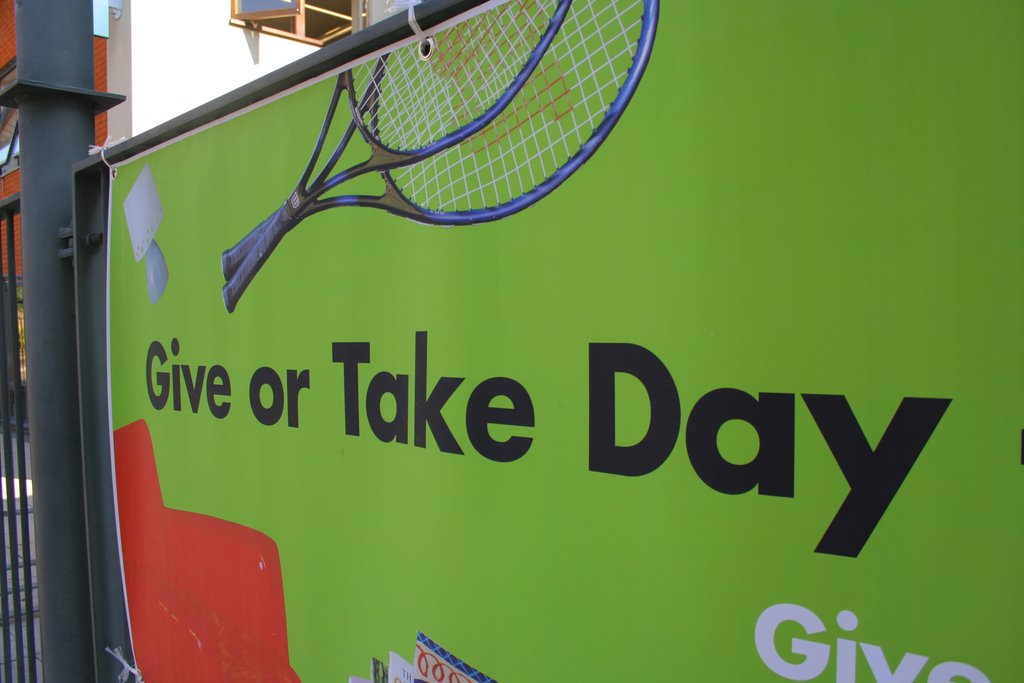
London, Hackney - Give or Take 5


Clearing out for the New Year? Do you have unwanted presents from Christmas? Have a pile of bits and bobs you don’t need but are too good to throw away? Why not bring along your unwanted items to the Give or Take day!

Hackney Council’s recycling team is holding the first Give or Take day of 2007 on Saturday 27 January, at Rushmore Primary School, Elderfield Road, E5 OLE.

Give or Take days have proved to be a great success, they offer residents the chance to give unwanted items like toys, furniture, clothes, bikes, tools, books and kitchenware, and take something that they might need. Previous Give or Take days have diverted as much as one tonne of donated materials from entering the waste stream; it’s a great way to reuse in Hackney.

Everything is free, no money is exchanged!

Too many items are thrown away each year, especially around the New Year period. Think about what can be reused before you throw it away, Give or Take days are a great way to help reduce the amount of rubbish produced in Hackney. Last year we reused around 3.5 tonnes of goods. For any questions or reports feel free to email me at wasteprevention@gmail.com

Technorati Tags: waste prevention

Monday, January 08, 2007

London, Hackney - Waste Prevention Campaign

The waste prevention campaign for Hackney in East London was launched in November 2006. There has been so many things going on that I have hardly had time to update this blog. We promoting various things to reduce rubbish and dependency on landfill and incinerator as these two are seen as the last approach to deal with rubbish.

The booklet is available to all residents, but so far around 8,000 booklets have been distributed through the campaign. This highlights Shop SMART, Food waste, Reusable bags, Stop junk mail, Real nappies, Home composting, Furniture reuse, Freecycle and Give or take. See an example of the booklet in jpg format, there are 20 pages in total. I will add how this was implemented and exact figures later on.


Technorati Tags: waste prevention

Tuesday, November 21, 2006

UK - Finalist


The judges were really impressed with Hackney’s Give or Take days, which give residents the opportunity to give away unwanted items and take others they might want or need, so reducing waste. “There is a great community angle to it,” commented the judges.

Building on the Give or Take concept, Hackney decided to use the events to raise awareness of recycling and waste prevention. The judges praised Hackney’s initiative in arranging for furniture reuse and nappy laundry organisations to attend the events and further promote reuse and waste minimisation.

“They decided to take a little idea and make it into a big event. It works really well and looks very professional.”

Oh well, next year!!!

More about the night winners in here


Technorati Tags: waste minimisation

Monday, October 30, 2006

London - Hackney, Real Nappies 2005/06

Enlarge picture to read article
This is the story advertised in the Hackney Today on 21 August, 2006. Showing the results of a years worth of real nappy usage in Hackneys waste tonnage.

London - Freecycle yahoo group


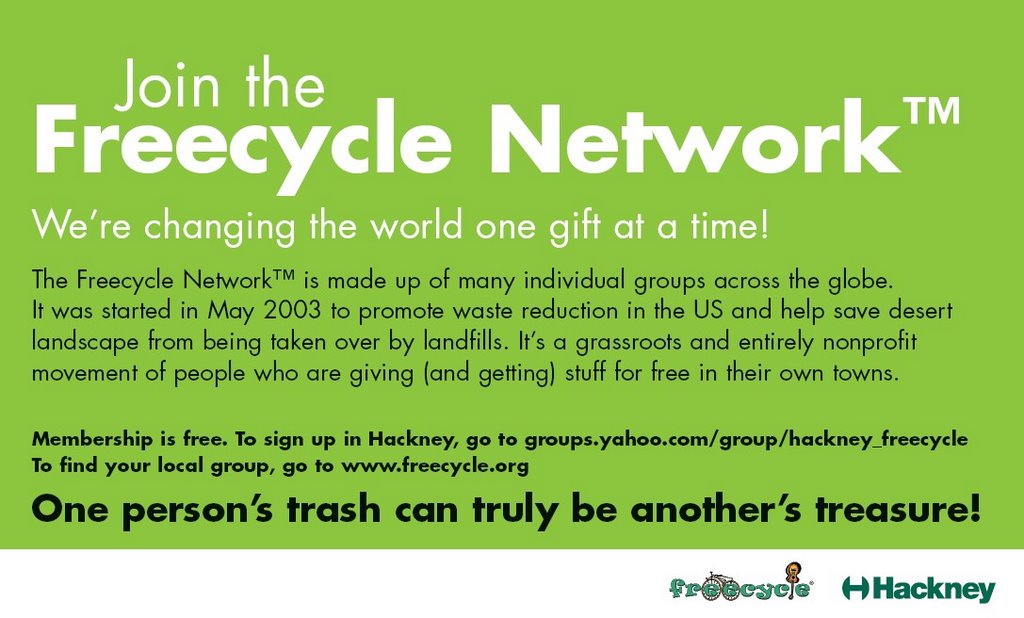
The Freecycle worldwide movement arrived in Hackney in 2006. Although there are many groups within London, I am promoting the Hackney one to help increase the number of members, so more is reused. It ties well with my Give or Takes. They are basically an online site where to give stuff away for free and more, read the add my team added in the Hackney Today local paper.

Technorati Tags: hackney

Wednesday, October 18, 2006

International - Survey of Zero Waste initiatives

Extracted from Green Alliance

Can countries, cities or businesses really eliminate waste completely? Is ‘zero waste’ an achievable absolute goal, or more a framing concept within which to develop progressive waste and resource management initiatives? With these questions in mind Green Alliance examined nine international examples where ‘zero waste’ goals or similar objectives have been set to explore the concept and the achievements of the approach in a little more detai.

A number of countries, cities and businesses around the world have adopted a ‘zero waste’ goal. Green Alliance examined a range of these initiatives at the local, regional and national scales with the aim of identifying international practices that are relevant to the ‘closed loop’ vision of transformed resource use. The survey assesses the coherence of the case studies’ objectives, identifies the policy measures put in place to achieve them, evaluates experiences to date and identifies lessons for the UK. The findings and recommendations from this work are given in the paper An international survey of zero waste initiatives (pdf format - 52KB).

A diverse range of approaches were considered: from the high-tech, large-scale waste management systems of consumerist San Francisco; to the locally based, small-scale initiatives in the Philippines. Purely voluntary schemes such as that rolled out in the town of Kamikatsu, Japan were assessed along side the more legislatively based examples such as the region of Flanders, Belgium.

International surveys yield ideas and demonstrate the art of the possible yet can always be dismissed as culturally specific. However, good ideas can always be imported, perhaps with adaptation, if there is the will to change. The case studies highlight that whilst there are some inherent problems with ‘zero waste’ as a concept and as a policy objective, there are nevertheless lessons to be learnt by critically considering the achievements of existing practice, wherever in the world that may be found.

Technorati Tags: waste minimisation

Monday, October 02, 2006

Shorlisted for The National Recycling Awards!

My birthday has arrived a week early, I have been told that my Give or Take project, has been shortlisted for The National Recycling Awards! Very happy! I am now competing for the best waste minimisation project of the year with:

• Bovis Lend Lease
• CRISP
• Hitech Equipment Ltd
• London Borough of Hackney (My team)

From www.nationalrecyclingawards.com

The awards are now widely recognised as the stamp of excellence in the Recycling Industry. Symbolising success and innovation a National Recycling Award will help generate publicity and increase the status of your business or organisation within the industry and wider business community.

JOIN US ON THE 15TH OF NOVEMBER TO FIND OUT WHO HAS WON! National Recycling Award winners will be presented with their awards at a glittering ceremony to be held at the Bournemouth International Centre on the 15th November 2006. This event is the industry's most glamorous awards event and the audience a who's who of the industry.

Technorati Tags: waste minimisation

Thursday, September 28, 2006

Denmark - Industrial Waste Minimisation working

Using financial support from the Danish EPA, the engineering works and iron foundry Vald. Birn A/S has launched work to minimise waste volumes, by analysing where to find the potential savings and improvements. Efforts to reduce waste volumes resulted in savings of 3,222 tonnes of waste, representing an amount of DKK 2.5 mill.. The project may inspire other companies in the foundry and machine industry. These are great savings - of money as well as other resources.

Technorati Tags: waste minimisation

Friday, September 22, 2006

London - Hackney, Real Nappy Network


The newsletter for Autumn 2006 from the Hackney Real Nappy Network is out. Check out their website. Also, the Islington Real Nappy Network is forming!

Technorati Tags: waste minimisation

Thursday, September 21, 2006

Europe - Why does the strategy opt for national waste prevention programmes?

One of the findings from the analysis conducted for the strategy is that there is no single waste prevention measure that could work in all Member States, due to the variety of cultural and geographical conditions. Prevention can only be achieved through a basket of measures that are most effective when designed and applied at a national or even regional or local level. The Commission therefore concluded that it would be most effective to require Member States to develop waste prevention programmes, at the same time leaving them the freedom to determine which measures will be most effective. The national waste prevention programmes would be mandatory and would have to be developed within three years of the entry into force of the revised Waste Framework Directive. These programmes must aim at breaking the link between economic growth and the environmental impacts associated to the generation of waste. The Member States must take into consideration the measures listed in Annex four to the proposed Directive and are required to determine targets and indicators for the measures they include in their national programmes. This will be the best way of achieving cost effective waste prevention.

From "Thematic Strategy on the prevention and recycling of waste and the proposal for the revision of the Waste Framework Directive" Look for question 13 to find European headline waste statistics with a single clear reference. A useful FAQ document from the European Commission arms you with statements and a reference

Technorati Tags: waste minimisation

Thursday, September 14, 2006

Ireland- Waste generation problem

Ireland has the highest level of municipal waste generation per capita of all the benchmark countries and manufacturing waste generation per employee is also relatively high. By not generating waste, we can eliminate the need to handle, transport, treat and dispose of waste. We can also avoid having to pay for waste management services. Investing resources in waste prevention and minimisation offers potential long-term benefits for the competitiveness of enterprises of all types. It is imperative for Ireland's future economic growth and environmental sustainability that the necessary resources and commitment to implement the National Waste Prevention Programme 2004-2008 are provided.

From RRF news

Technorati Tags: waste minimisation

Tuesday, September 12, 2006

London, Hackney - Give or Take IV

Hackney will be having its fourth Give or Take of the year. This one will take place on 23 September in Queensbridge Sports and Community Centre, Activity Room 1 and Café Room, 30 Holly Street, Dalston, E8 3XW

Since the start of my first event, many other councils in London have held these events, as they are been included in the waste prevention strategies. This will conclude my yearly Give or Take events, I will be writing a short report concluding its success and recommendations to carry on or offer a group to do them for us. Anyway, Give or Take days are a community waste exchange event – an opportunity for residents to give unwanted items like furniture, bikes, toys, tools, books, kitchenware and bric-a-brac, and then take something they might like or need. As well as providing residents with the opportunity to Give or Take unwanted items, the event also helps reduce the amount of waste that builds up in Hackney. It will be a fun, activity-packed community based day with a bouncy castle for kids. I will be posting photos of the goods and the actual tonnages reused by the four events held in the last year.

Technorati Tags: waste minimisation

Saturday, September 09, 2006

MSc Thesis -Mobile phone eco-design

The title of my MSc thesis was: "The effect of WEEE & RoHS Directives upon the eco-design of mobile phones marketed within the European Union" Finished in 2003. This is the abstract plus some graphs.

The obligations set by the waste of electrical and electric equipment directive (WEEE) and the restriction of hazardous substances in electrical and electric equipment directive (RoHS) are looked up upon the ecodesign of mobile phones. The WEEE directive sets a requirement of recyclability target of 65% at least. Various alternatives are examined to enable mobile phone manufacturers achieved this target. The disassembly of the printed wiring board and the liquid crystal display of the mobile phones are also required. Manual disassembly is currently the main cost in the recycling process, for this reason automatic mechanisms alternatives are also examined. Producers are required to provide information to recycling processes on hazardous substances location and disassembly procedures. Bard codes and smart tagging are proposed as possible alternatives. Lead and brominated flame retardants are to be phased out from mobile phones by August 2006. The surveyed companies considered lead which is used for soldering process the most challenging restricted substance in the RoHS directive. Alternatives lead solders are already being used by leading companies. Almost all of the contacted companies use a diverse range of methods in order to meet the requirements. Design changes need to be applied early in the phone development process. Ecodesign tools aid producers into achieving this at an early stage of the phones life cycle.

National mobile subscribers/penetration, 1991-2007

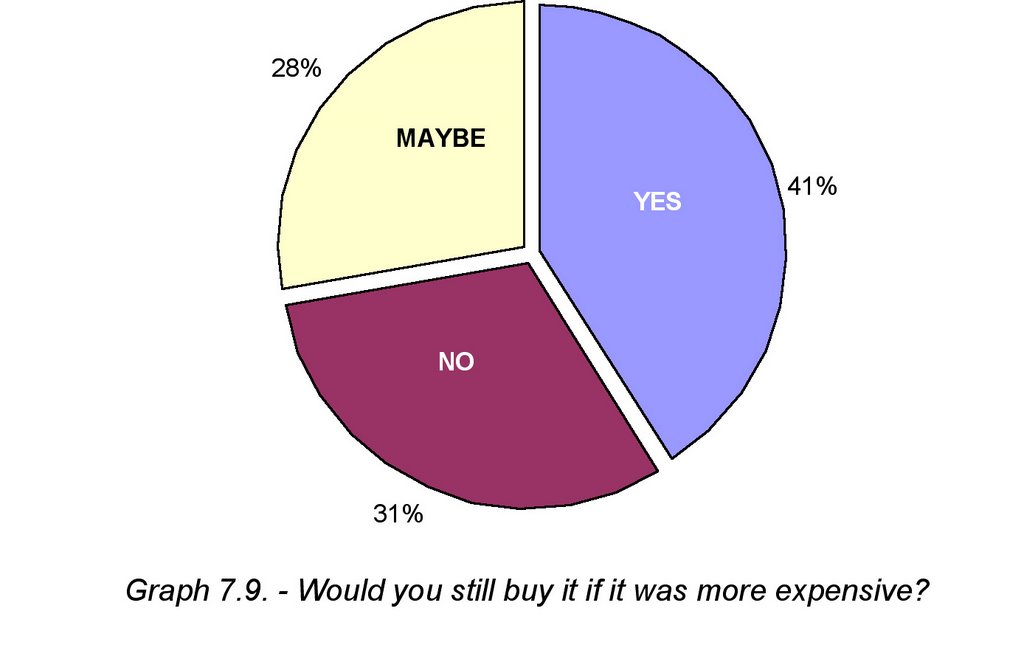
The mobile phone manufacturers that were contacted have mainly over a decade of experience in the production field. They mainly considered themselves to be somewhat above other companies of the same sector in environmental issues. All of them have been researching for design changes for more than two years to date. The public in general is interested in environmental friendly mobile phones, however many would not buy it if prices were slightly higher. Peoples’ awareness on the existence of the directives is totally non existent. Recommendation is suggested for information campaigns awareness to start as soon as is possible.

My methodology was based on literature review, email questionnaires to the public (150 answers) and email/post questionnaires to global mobile phone manufacturers.

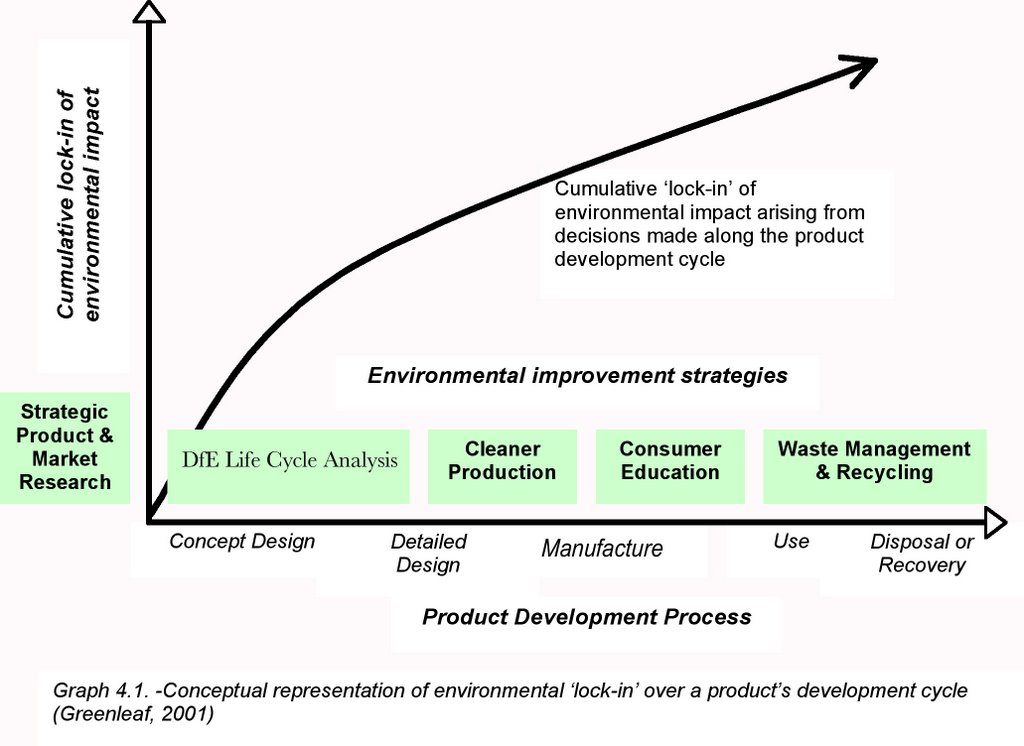
Ecodesign is also known as Design for the Environment (DfE) or lifecycle design, see graph below. In most cases an average of 80% of the environmental inputs are fixed during the research and development stage.


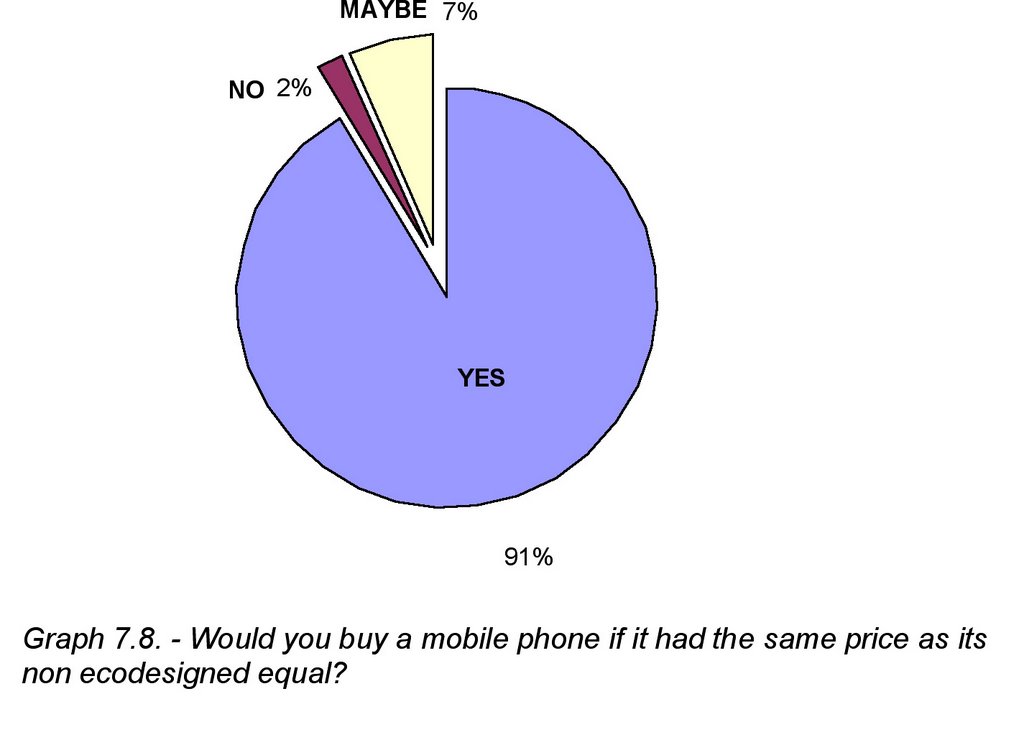
These are some of the pie charts for the 150 answers-questionnaire to the general European population.


There is a large difference in responses, showing that Europeans have limits and wont be paying more for a commodity that they already can have without looking further in their pockets. You will always get a niche for an eco product, but the market is reduced. The higher prices should be added compulsory, payed by manufacturers and the public. This is everyones' problem and must be tackled by everyone.

Email me at ander80@gmail.com you want the thesis.doc. Thanks.

Technorati Tags: waste minimisation

Tuesday, September 05, 2006

London, Hackney - Furniture reuse birthday


Morph and Hackney Recycling team are getting together to celebrate Morph's first year anniversary. The shop opened on 14 April, 2005. It has been collecting reusable furniture around Hackney since then, and is now expanding even more! The collected furniture is refurbished and sent to the shop. Residents in low income can benefit with the 30% discount priviledge card, however the prices are already low.

Attendance only by confirmation from RSPV (in picture above)

Technorati Tags: waste minimisation